





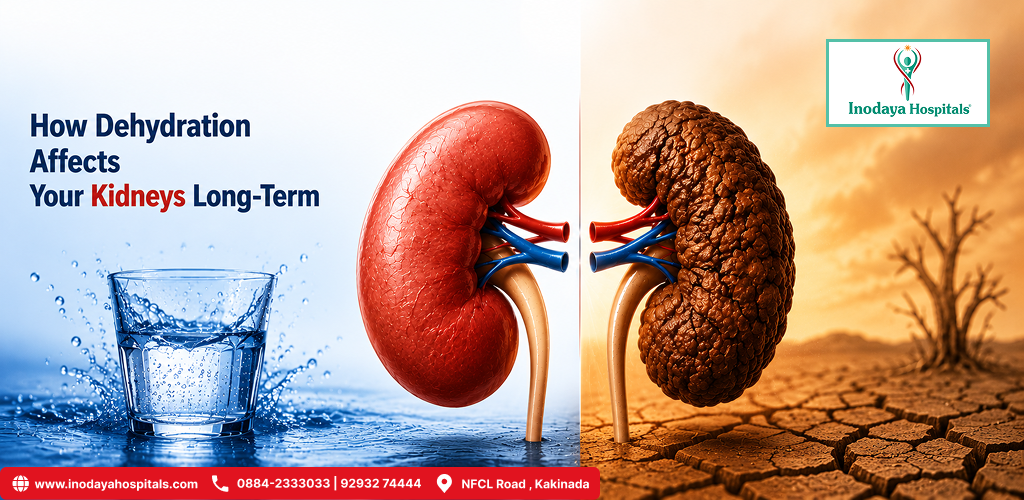
Water plays a vital role in maintaining overall health, especially when it comes to kidney function. The kidneys help remove waste, balance fluids, and regulate essential minerals in the body. However, when the body does not receive enough fluids, dehydration can put extra strain on the kidneys and lead to long-term health complications. Understanding the signs of dehydration and taking preventive measures can help protect your kidney health.
What Is Dehydration?
Dehydration occurs when the body loses more fluids than it takes in. This can happen due to excessive sweating, vomiting, diarrhea, fever, or inadequate water intake.
Common causes of dehydration include:
- Hot weather and excessive sweating
- Not drinking enough water
- Illness causing fluid loss
- Intense physical activity
- Certain medications
Recognizing the early signs of dehydration is important to prevent complications.
How Do the Kidneys Depend on Hydration?
The kidneys require adequate water to filter waste products and remove toxins through urine.
Proper hydration helps:
- Maintain healthy kidney function
- Remove waste efficiently
- Prevent the formation of kidney stones
- Support healthy blood circulation
- Regulate electrolyte balance
Without enough fluids, the kidneys may struggle to perform these essential functions.
Signs of Dehydration You Should Not Ignore
Identifying dehydration early can help prevent long-term kidney damage.
Common signs of dehydration include:
- Increased thirst
- Dry mouth and lips
- Dark-colored urine
- Reduced urine output
- Fatigue or weakness
- Dizziness or headaches
These signs of dehydration may seem mild initially but can become serious if ignored.
Long-Term Effects of Dehydration on the Kidneys
Chronic dehydration can have a significant impact on kidney health over time.
Potential complications include:
- Reduced kidney function
- Increased risk of kidney stones
- Urinary tract infections
- Electrolyte imbalances
- Higher risk of chronic kidney disease
Ignoring persistent signs of dehydration can increase the chances of developing these complications.
Who Is at Higher Risk?
Some individuals are more vulnerable to dehydration-related kidney problems.
Higher-risk groups include:
- Older adults
- Children
- People with diabetes
- Individuals working outdoors
- Patients with existing kidney conditions
These groups should pay close attention to the signs of dehydration and maintain proper fluid intake.
Tips to Prevent Dehydration
Simple lifestyle habits can help protect your kidneys and overall health.
Follow these tips:
- Drink plenty of water throughout the day
- Increase fluid intake during hot weather
- Eat water-rich fruits and vegetables
- Avoid excessive caffeine and alcohol
- Stay hydrated during exercise
Taking these precautions can help reduce the risk of dehydration and support long term kidney health.
When Should You Consult a Doctor?
Medical attention may be necessary if dehydration becomes severe or symptoms persist.
Seek medical help if you experience:
- Extreme thirst
- Confusion or dizziness
- Very dark urine
- Little or no urination
- Persistent signs of dehydration despite drinking fluids
Early medical intervention can prevent serious kidney-related complications.
Conclusion
Dehydration is more than just feeling thirsty it can have lasting effects on your kidneys and overall health. Understanding the signs of dehydration and maintaining proper hydration are essential for protecting kidney function and preventing long-term complications. By staying hydrated and seeking timely medical care when needed, you can support healthy kidneys and improve your overall well-being. Contact us today for expert kidney care and health guidance