



Fever is one of the most common reasons people visit a doctor, especially during seasonal changes. However, not every fever has the same cause. Some are caused by viruses, while others result from bacterial infections. Understanding viral fever vs bacterial infection is important because the treatment for each condition is different. Knowing the difference between viral and bacterial infection can help you seek the right medical care and avoid unnecessary medications.
What Is a Viral Fever?
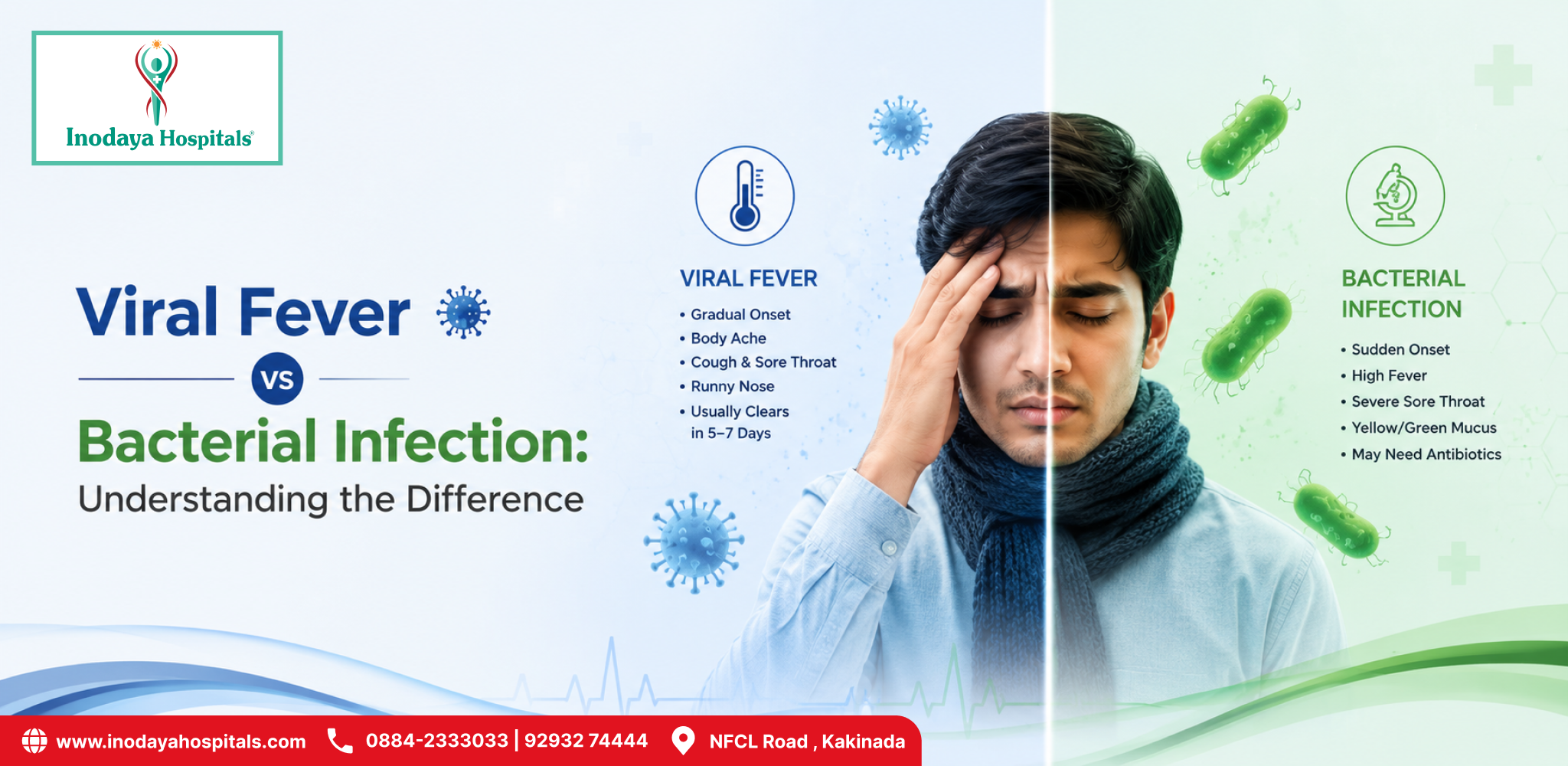
A viral fever occurs when the body responds to an infection caused by a virus. It usually improves with rest, hydration, and supportive care.
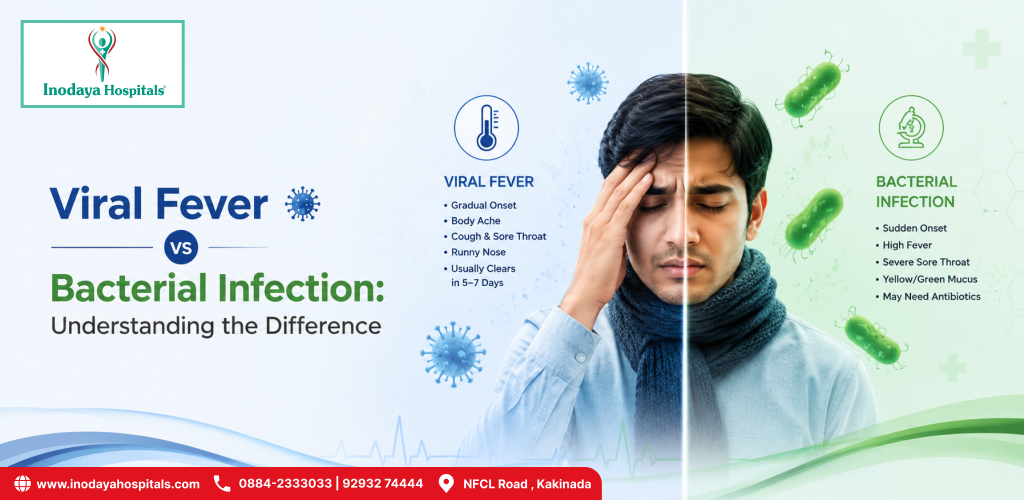
Common viral fever symptoms include:
- Fever with chills
- Body aches and muscle pain
- Headache
- Sore throat
- Runny or blocked nose
- Dry cough
- Fatigue
Most viral fever symptoms improve within a few days, but medical attention may be needed if symptoms become severe.
What Is a Bacterial Infection?
A bacterial infection is caused by harmful bacteria that multiply in the body. Unlike viral infections, bacterial infections often require antibiotics prescribed by a doctor.
Common bacterial infections include:
- Pneumonia
- Urinary tract infections (UTIs)
- Strep throat
- Skin infections
- Typhoid fever
Understanding the difference between viral and bacterial infection helps ensure the correct treatment is given.
Viral Fever vs Bacterial Infection: Key Differences
Knowing the viral fever vs bacterial infection differences can help you recognize when medical evaluation is necessary.
| Viral Fever | Bacterial Infection |
| Caused by viruses | Caused by bacteria |
| Usually resolves with supportive care | Often requires antibiotics |
| Common during seasonal outbreaks | May occur after untreated viral infections or direct bacterial exposure |
| Symptoms improve gradually | Symptoms may worsen without treatment |
Although symptoms may appear similar, only a medical evaluation can confirm the exact cause.
Viral Fever Symptoms You Should Not Ignore
While many viral infections are mild, some warning signs require immediate medical attention.
Consult a doctor if you experience:
- High fever lasting more than three days
- Difficulty breathing
- Severe dehydration
- Persistent vomiting
- Confusion or excessive drowsiness
- Severe weakness
Ignoring severe viral fever symptoms may increase the risk of complications.
How Doctors Diagnose the Cause
Since symptoms often overlap, doctors use clinical evaluation and diagnostic tests to identify the infection.
Common diagnostic methods include:
- Physical examination
- Blood tests
- Urine tests
- Throat swab (if required)
- Chest X-ray for respiratory infections
Proper diagnosis helps determine the difference between viral and bacterial infection and ensures appropriate treatment.
Prevention Tips
Simple preventive measures can reduce the risk of both viral and bacterial infections.
Protect yourself by:
- Washing your hands regularly
- Drinking clean and safe water
- Eating freshly prepared food
- Avoiding close contact with infected individuals
- Covering your mouth while coughing or sneezing
- Getting adequate rest and maintaining a healthy diet
Good hygiene and a strong immune system play an important role in preventing infections.
When Should You See a Doctor?
Seek medical attention if your fever is severe or does not improve with home care.
Visit a healthcare professional if you have:
- Fever above 102°F (38.9°C)
- Persistent viral fever symptoms
- Difficulty breathing
- Severe body pain
- Symptoms lasting longer than expected
- Recurrent fever episodes
Early medical evaluation can help identify whether it is viral fever vs bacterial infection and prevent complications.
Conclusion
Although viral and bacterial infections may share similar symptoms, their causes and treatments are different. Understanding viral fever vs bacterial infection, recognizing viral fever symptoms, and knowing the difference between viral and bacterial infection can help you seek timely medical care and recover faster. Never self-medicate with antibiotics without consulting a doctor. Early diagnosis and appropriate treatment are the keys to better health. Contact Inodaya Hospitals today for expert diagnosis and treatment of fever and infectious diseases.