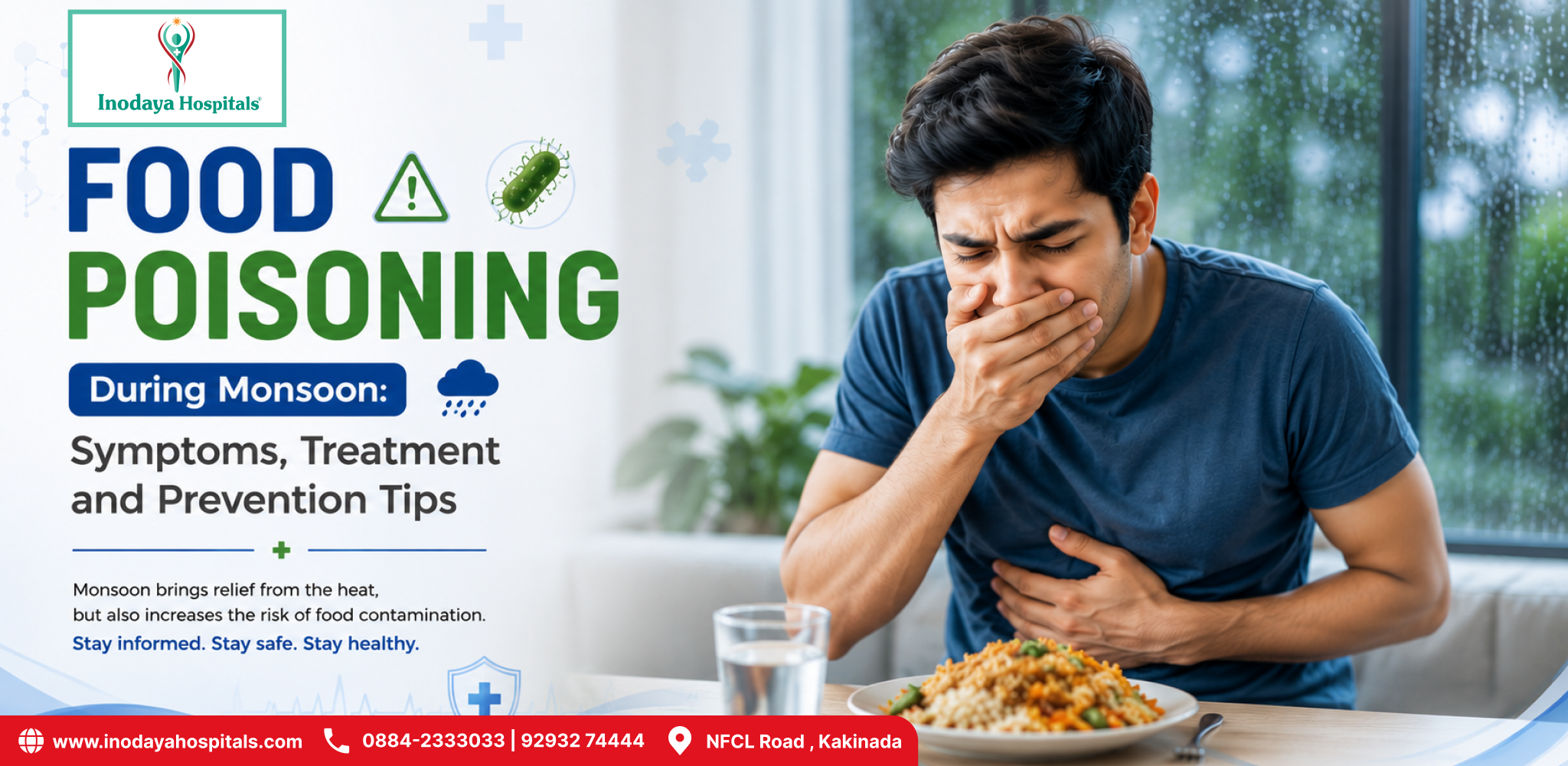



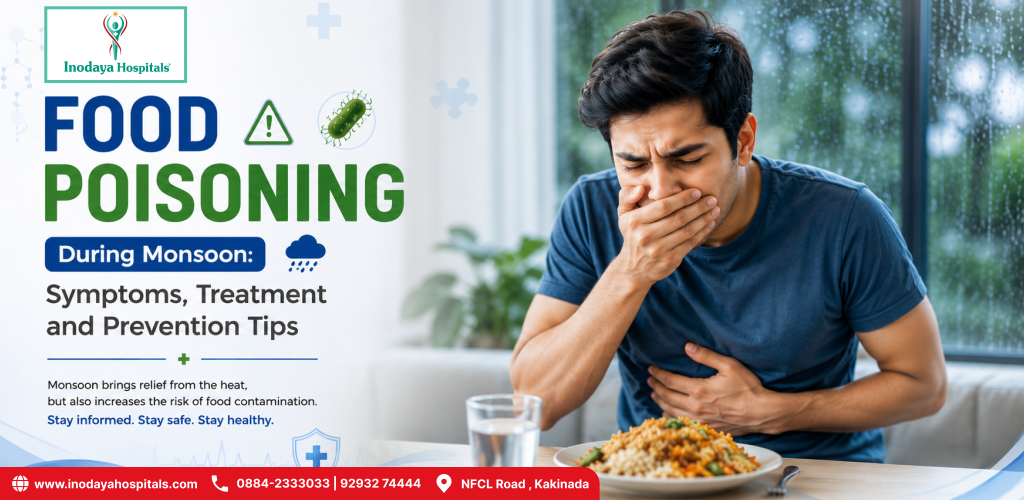
The monsoon season brings cooler weather, but it also increases the risk of foodborne illnesses. High humidity, contaminated water, and improper food storage can allow harmful bacteria and viruses to multiply quickly. As a result, food poisoning during monsoon becomes more common, especially among children, older adults, and people with weaker immune systems. Recognizing the symptoms early and taking the right precautions can help prevent serious complications.
Why Is Food Poisoning More Common During Monsoon?
During the rainy season, food can spoil faster because of increased moisture and humidity. Flooding and poor sanitation can also contaminate drinking water and fresh produce.
Common reasons include:
- Eating food that has been left uncovered.
- Drinking contaminated water.
- Improper refrigeration of cooked food.
- Consuming food from unhygienic places.
- Poor hand hygiene before preparing or eating food.
These factors make food poisoning during monsoon a common seasonal health concern.
Common Symptoms of Food Poisoning
Symptoms usually begin within a few hours to a few days after eating contaminated food.
Common symptoms include:
- Nausea and vomiting.
- Loose stools or diarrhea.
- Stomach cramps.
- Fever.
- Weakness and fatigue.
- Loss of appetite.
Most mild cases improve within a couple of days, but severe symptoms may require medical care.
What Causes Food Poisoning?
Food poisoning occurs when harmful microorganisms or toxins enter the digestive system.
Common causes include:
- Bacteria such as Salmonella and E. coli.
- Viruses.
- Contaminated water.
- Improperly cooked meat or seafood.
- Unwashed fruits and vegetables.
The risk of food poisoning during monsoon increases when food safety practices are not followed.
Treatment for Food Poisoning
Treatment depends on the severity of the infection.
Doctors may recommend:
- Drinking plenty of fluids to prevent dehydration.
- Oral rehydration solutions (ORS).
- Light, easily digestible foods.
- Rest.
- Medicines to control symptoms if necessary.
Antibiotics are only used when a doctor determines that a bacterial infection requires them. Self-medication should be avoided.
Prevention Tips During Monsoon
Simple hygiene measures can significantly reduce the risk of infection.
Follow these tips:
- Drink boiled or filtered water.
- Wash your hands before eating.
- Eat freshly cooked food.
- Avoid stale leftovers.
- Wash fruits and vegetables thoroughly.
- Avoid raw or undercooked meat and seafood.
- Be cautious when eating outside during the rainy season.
Following these precautions can help prevent food poisoning during monsoon and keep your digestive system healthy.
When Should You See a Doctor?
While mild food poisoning often improves on its own, certain symptoms require medical attention.
Seek medical care if you experience:
- Persistent vomiting.
- Severe diarrhea lasting more than two days.
- High fever.
- Blood in the stools.
- Signs of dehydration, such as dizziness or very little urine.
- Severe abdominal pain.
Early medical evaluation can prevent complications, especially in young children, older adults, and people with chronic illnesses.
Importance of Timely Treatment
Ignoring severe symptoms can lead to dehydration and other complications. Timely diagnosis helps identify the cause of the illness and ensures appropriate treatment.
If symptoms of food poisoning during monsoon persist or worsen, it is important to consult a healthcare professional rather than relying on home remedies alone.
Conclusion
The rainy season increases the risk of foodborne infections because of contaminated water, high humidity, and improper food handling. By practicing good hygiene, drinking safe water, and eating freshly prepared meals, you can significantly reduce your chances of developing food poisoning during monsoon. If symptoms become severe or do not improve, seeking timely medical care is the best way to ensure a safe and quick recovery. Contact Inodaya Hospitals today for expert evaluation and treatment of digestive and foodborne illnesses. Our experienced medical team provides timely diagnosis and personalized care to help you recover safely.