




Monsoon brings relief from the heat, but increased humidity, water contamination, and sudden weather changes can also contribute to the spread of infections. Respiratory illnesses such as viral infections, bronchitis, and pneumonia may become more common during this season. Understanding respiratory infection symptoms early can help you take timely action and prevent complications
Why Do Respiratory Infections Increase During Monsoon?
Changes in temperature and humidity can create favorable conditions for the spread of respiratory infections. Crowded indoor spaces and close contact with infected people can also increase transmission.
Common factors include:
- Sudden changes in temperature
- Increased humidity
- Poor ventilation
- Exposure to dust and pollutants
- Close contact with infected individuals
Being aware of respiratory infections during monsoon can help you take preventive measures and protect your family.
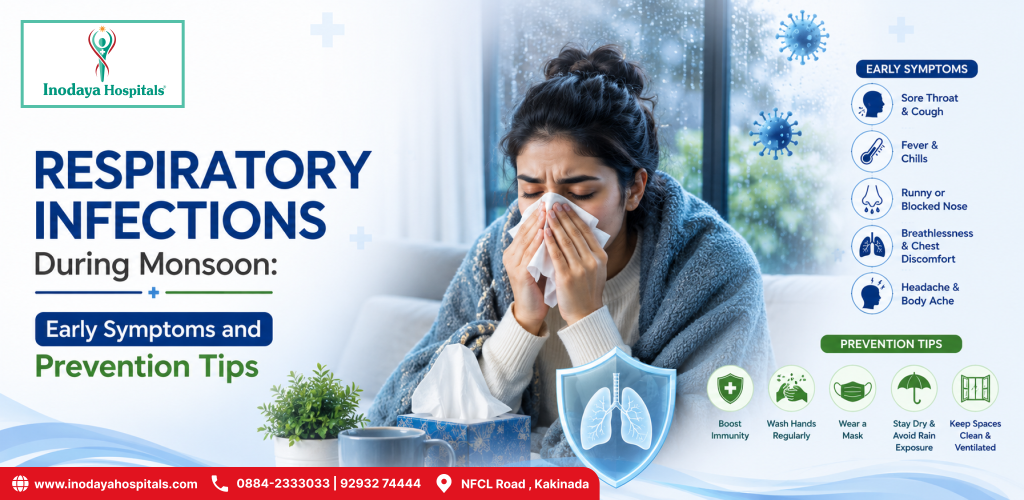
Common Respiratory Infection Symptoms
Respiratory infections can affect the nose, throat, airways, and lungs. Symptoms may vary depending on the type and severity of infection.
Common symptoms include:
- Cough
- Sore throat
- Runny or blocked nose
- Fever and chills
- Headache
- Body aches
- Breathing difficulty
- Fatigue
Persistent respiratory infection symptoms should not be ignored, particularly in children, older adults, and people with existing health conditions.
Common Respiratory Infections During Monsoon
Several respiratory conditions may occur during seasonal changes.
These include:
- Common cold
- Influenza
- Bronchitis
- Pneumonia
- Asthma flare-ups
- Other viral respiratory infections
While many infections may improve with appropriate care, severe respiratory infections during monsoon may require medical evaluation.
How to Prevent Respiratory Infections
Simple precautions can reduce your risk of infection during the rainy season.
Follow these preventive measures:
- Wash your hands regularly with soap and water
- Avoid close contact with people who are sick
- Cover your mouth and nose when coughing or sneezing
- Keep indoor spaces clean and well ventilated
- Avoid smoking and exposure to secondhand smoke
- Stay hydrated and maintain a balanced diet
- Get recommended vaccinations when appropriate
These measures can help reduce the spread of respiratory infections during monsoon.
When Should You See a Doctor?
Most mild respiratory infections improve with proper rest and supportive care. However, certain symptoms may require medical attention.
Consult a doctor if you experience:
- Persistent or worsening cough
- High or prolonged fever
- Difficulty breathing
- Chest pain
- Severe weakness or fatigue
- Symptoms that do not improve after several days
Early evaluation of respiratory infection symptoms can help identify the underlying cause and prevent complications.
Who Is at Higher Risk?
Some people may be more vulnerable to complications from respiratory infections.
Higher-risk groups include:
- Young children
- Older adults
- People with asthma or COPD
- Individuals with weakened immunity
- People with chronic heart or lung conditions
These individuals should take extra precautions during respiratory infections during monsoon and seek medical advice when symptoms appear.
Importance of Timely Treatment
Ignoring persistent respiratory symptoms can sometimes allow an infection to become more severe. A doctor can assess your symptoms, perform necessary tests, and recommend appropriate treatment. Avoid taking antibiotics without medical advice, as antibiotics do not treat viral infections.
Conclusion
Seasonal changes can increase the risk of respiratory illnesses, making awareness and prevention especially important. Recognizing respiratory infection symptoms early, maintaining good hygiene, and seeking medical advice when necessary can help reduce complications. Taking appropriate precautions can help you and your family stay healthier throughout the monsoon season. Contact Inodaya Hospitals today for expert respiratory care and timely diagnosis.